Christmas Grocery List on a Budget: What to Buy, What to Skip & How to Save
Christmas That Works | Smart Holiday Shopping
The Christmas grocery bill can grow surprisingly fast. Between the holiday dinner, baking ingredients, breakfast, drinks, and snacks for guests, it’s easy to end up with a cart full of extras you never planned to buy.
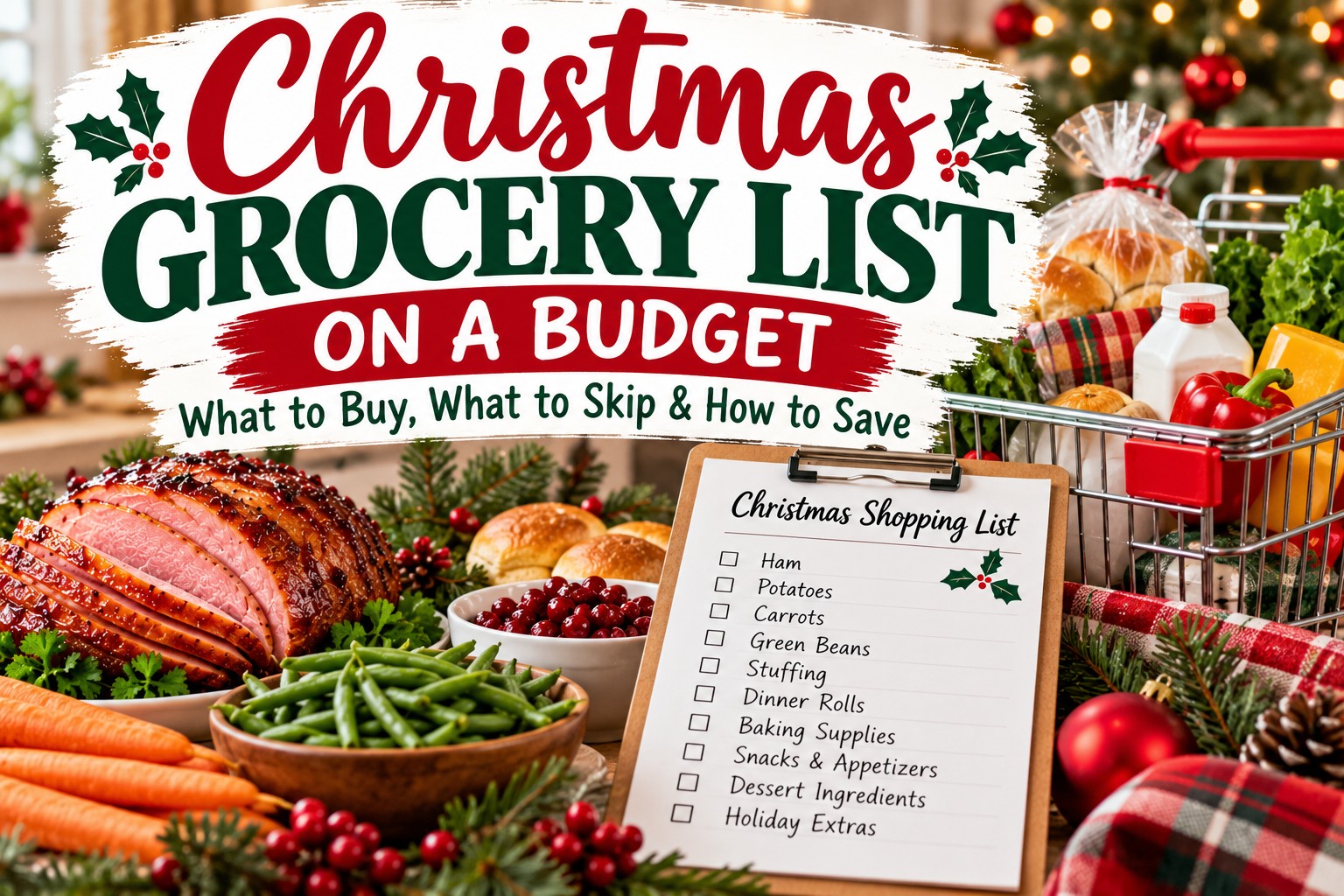
This Christmas grocery list on a budget helps you shop with a plan, avoid duplicate purchases, and spend on the foods your family will actually enjoy.
You’ll find a category-by-category checklist, a flexible example budget, a simple shopping timeline, and practical ways to keep holiday food costs manageable.
Before You Shop: Build Your Christmas Food Plan
Start with four questions: How many people are you feeding? Which meals are you hosting? What food do you already have? What amount can you spend without affecting essential bills?
- Write down every meal: Christmas Eve, Christmas morning, Christmas dinner, and any gatherings you’re hosting.
- Choose a short menu: A main dish, a few favorite sides, and one dessert are often enough.
- Shop your kitchen: Check pantry shelves, freezer, refrigerator, and baking supplies.
- Set category limits: Allocate money to dinner, breakfast, baking, drinks, and extras before shopping.
If you still need a dinner menu, use our Christmas Dinner on a Budget: Feed 8 Without Overspending guide as your starting point.
Christmas Grocery List: What to Buy
This master list is intentionally flexible. Choose only the items required by your menu, cross off what you already own, and adjust quantities for your guest count.
🍖 Main Dish & Protein
- Ham, turkey, chicken, or another chosen main
- Eggs for breakfast or baking
- Optional breakfast sausage or bacon
- Broth or stock if needed
🥔 Vegetables & Fruit
- Potatoes
- Carrots
- Green beans or another green vegetable
- Onions and garlic
- Apples or other fruit for dessert
- Fresh fruit for breakfast, if planned
🥛 Dairy & Refrigerated
- Milk
- Butter
- Cheese, if required by recipes
- Yogurt or cream, only if planned
🍞 Bread & Pantry
- Dinner rolls or bread
- Stuffing mix or bread for stuffing
- Rice or pasta, if on your menu
- Flour and oats
- Cooking oil
- Broth, gravy ingredients, or mix
🍪 Baking & Dessert
- Sugar or brown sugar
- Baking powder or baking soda
- Cinnamon or other spices
- Chocolate chips, if needed
- Vanilla extract, if needed
- Apples or another planned dessert ingredient
☕ Drinks, Snacks & Hosting
- Coffee or tea
- Juice or other planned beverages
- One or two appetizers, if needed
- Ice, if needed
- Napkins or foil only if supplies are low
- Containers for leftovers, if needed
Sample Christmas Grocery Budget
Here’s an illustrative $150 holiday food plan for a household hosting a Christmas dinner plus some breakfast, baking, and snacks. These amounts are spending allowances, not verified store prices or a guarantee that every menu will fit.
| Category | Example Budget |
|---|---|
| Christmas dinner | $90 |
| Christmas breakfast | $15 |
| Baking and dessert extras | $15 |
| Drinks and snacks | $15 |
| Price changes and forgotten essentials | $15 |
| Total spending limit | $150 |
If you’re using the sample $100 dinner menu, change the dinner allowance to $100 and adjust the other categories or your overall limit. The important part is making sure all category allowances add up to an amount you can afford.
What to Buy Early and What to Buy Later
Two to Four Weeks Before Christmas
- Finalize your menu and guest count.
- Compare prices for your main dish and watch for genuine promotions.
- Buy shelf-stable ingredients you know you’ll use, such as flour, sugar, stuffing mix, and spices.
- Check your freezer space before purchasing frozen foods.
One Week Before Christmas
- Buy freezer-friendly foods and longer-lasting produce as appropriate.
- Check that you have enough butter, milk, and baking ingredients.
- Confirm whether guests are bringing a dish so you don’t buy duplicates.
One to Three Days Before Christmas
- Pick up fresh produce, bread, and other perishables.
- Prepare make-ahead dishes following safe storage guidelines.
- Review the list one last time before making an extra trip.
Follow package guidance for storing and thawing meat. For food safety, use current guidance from the U.S. government’s FoodSafety.gov.
10 Ways to Save Money on Christmas Groceries
- Compare the cost per serving. The cheapest package isn’t always the cheapest meal.
- Choose a main dish based on sales. Chicken or pork may beat ham or turkey depending on your store.
- Buy store brands. Compare ingredients and unit prices on basics.
- Use frozen vegetables. They’re often convenient, affordable, and less likely to spoil before the meal.
- Limit desserts. One crowd-pleasing dessert can be enough.
- Keep appetizers simple. Guests don’t need a second full meal before dinner.
- Avoid buying entire spice jars for one recipe. Substitute pantry seasonings when the flavor still works.
- Check package sizes. Buy the amount you need, not just the item with the biggest sale sign.
- Use a calculator while shopping. Track your cart total before checkout.
- Plan leftovers. Turn extra meat and vegetables into another meal rather than throwing them away.
What to Skip When You’re Trying to Save
Holiday grocery displays are designed to make extras feel essential. Before buying something that wasn’t on your list, ask whether it makes a meaningful difference to your gathering.
- Multiple desserts: Choose one favorite, or ask a guest to bring one.
- Specialty beverages: Water, tea, coffee, and one festive option may be plenty.
- Premade party platters: Compare the convenience premium with assembling a simple platter yourself.
- Expensive single-use ingredients: Prefer recipes that share pantry staples.
- Oversized quantities: Buy for your actual guest count, with a realistic amount for leftovers.
A Simple Christmas Shopping Checklist You Can Copy
- Confirm how many guests are coming
- Choose every meal and dish
- Check pantry, refrigerator, and freezer
- Write down needed quantities
- Set the maximum grocery total
- Check sale flyers and compare unit prices
- Group the list by store department
- Bring a calculator or use your phone
- Leave room in the budget for price changes
Frequently Asked Questions
How much should I budget for Christmas groceries?
Start with your available money, guest count, and number of meals. A budget that works for one household may not work for another. Separate Christmas dinner from breakfast, baking, snacks, and drinks so you don’t underestimate the total.
What are the cheapest foods to serve at Christmas?
Potatoes, carrots, rice, stuffing, rolls, and simple homemade desserts can help stretch a meal. The best-value main dish depends on local prices and seasonal sales.
Should I shop early for Christmas food?
Buying nonperishables early can spread out errands and let you take advantage of worthwhile sales. Buy perishables based on their storage needs and your meal schedule.
How do I avoid overspending at the grocery store?
Plan meals first, check what you already own, shop from a list, compare unit prices, and track the running total. Give yourself a small cushion for price changes.
What should I buy for a simple Christmas dinner?
Choose one main dish, two or three sides, bread if desired, and one dessert. See our Christmas dinner menu for eight for a concrete example.
More Holiday Planning Help
- Christmas Dinner on a Budget: Feed 8 Without Overspending
- Christmas That Works: Affordable Gifts, Meals, Games & More
- Holidays That Work
- More Holiday Grocery Shopping Tips
🎁 Coming Soon: Free Christmas Gift Budget Planner
We’re creating a printable planner to help you set gift spending limits, track purchases, and avoid surprise costs. It’s not available for download yet, but you can explore more affordable holiday ideas now.
Explore Christmas That Works →Final Thoughts
A budget-friendly Christmas grocery list isn’t about skipping everything festive. It’s about choosing the foods that matter, planning the meals you actually need, and keeping enough room in your budget to enjoy the season without financial regret.
Start with your menu, shop your kitchen, and bring a focused list to the store. Small decisions made before checkout can make a big difference after the holidays.