Thanksgiving Grocery List & Budget Planner for 8
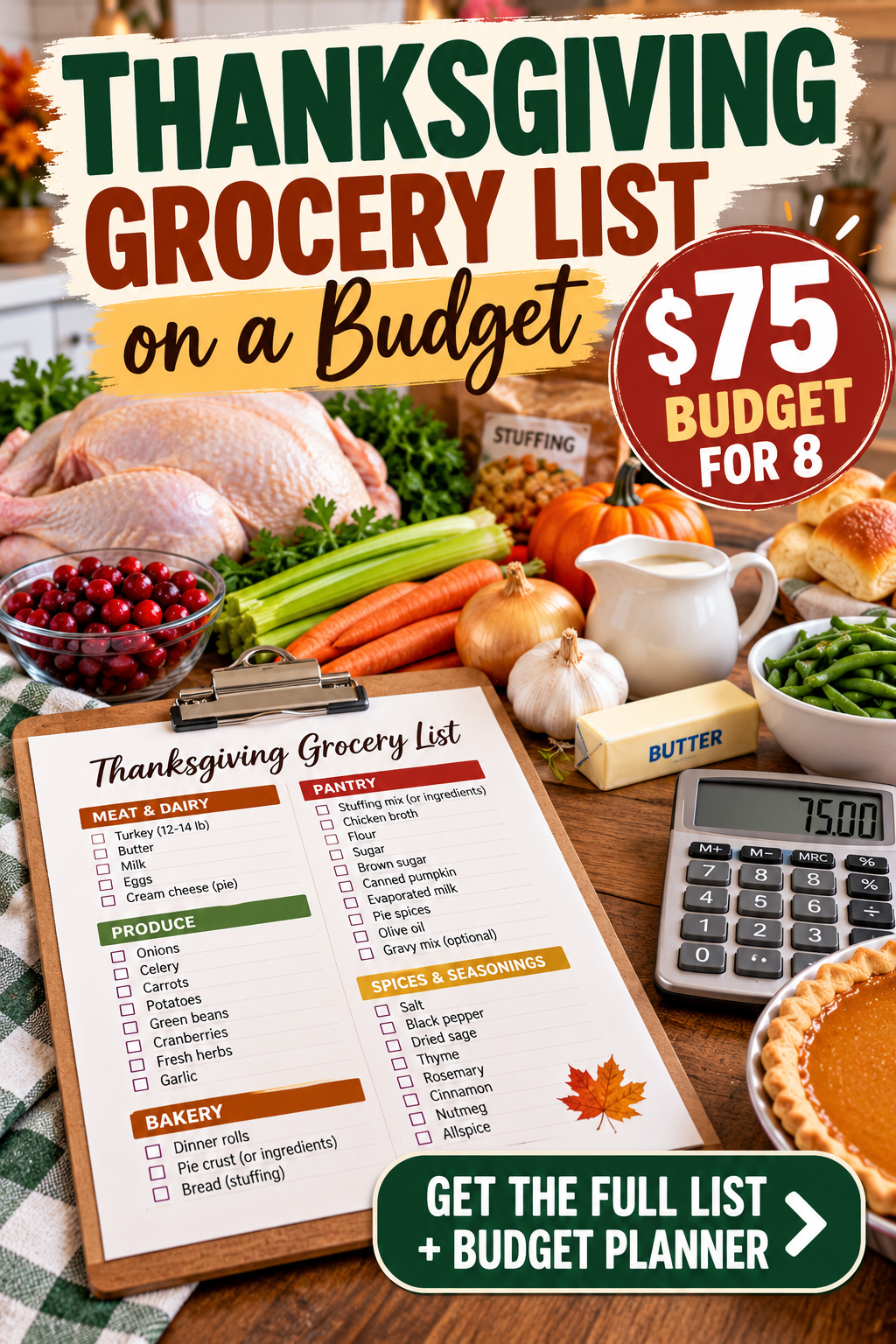
Thanksgiving grocery list on a budget with a $75 meal planning target for eight people
Plan Thanksgiving dinner for eight with a grocery checklist and a $75 sample budget.

A Thanksgiving grocery list should make hosting easier, not send you wandering through the store with three half-finished lists and a runaway budget. This practical Thanksgiving grocery list and budget planner shows you what to buy for eight people, how much to plan to spend, and how to keep your holiday meal organized.

Quick plan: Eight guests, one turkey, five sides, rolls, and pumpkin pie. The example shopping budget is $75 total (about $9.38 per person), assuming you already have a few pantry basics. These are illustrative spending targets, not verified store prices. Check local ads and adjust before shopping.

Thanksgiving grocery list for 8 people

This list matches our Thanksgiving dinner for eight on a $75 budget. Adjust amounts for children, hearty eaters, dietary needs, and how many leftovers you want.

CategoryWhat to buySuggested quantityBudget target
TurkeyWhole frozen turkey10–12 lb$18
PotatoesRusset or Yukon Gold potatoes5 lb bag$4
StuffingBoxed stuffing mix2 boxes (about 6 oz each)$4
VegetablesFrozen green beans2 lb$4
VegetablesWhole carrots2 lb$2
GravyGravy packets or jarred gravyEnough for 8 servings$3
BreadDinner rolls12-count$4
DessertReady-made pumpkin pie or ingredients1 pie, 8 slices$7
DairyButter1 lb (some may remain)$5
DairyMilk1/2 gallon$3
FlavoringsOnion, garlic, herbs, or seasoningAs needed$4
Pantry / drinksBroth, sugar, oil, tea or drink mixAs needed$7
BufferPrice changes or forgotten itemsReserve$10
TOTAL PLANNED$75

The $75 budget includes a $10 buffer. Check what you already own before shopping; if you need to purchase every pantry ingredient, your total may be higher. Turkey promotions may require a minimum purchase.

Copyable Thanksgiving shopping checklist

Take this list to the store, or copy it into your phone’s notes app. Cross off anything already in your kitchen first.

Meat and frozen foods

  • ☐ Whole turkey, 10–12 lb
  • ☐ Frozen green beans, 2 lb

Produce

  • ☐ Potatoes, 5 lb
  • ☐ Carrots, 2 lb
  • ☐ Onion and garlic, if needed
  • ☐ Fresh herbs, optional

Bakery and dry goods

  • ☐ Stuffing mix, 2 boxes
  • ☐ Dinner rolls, 12
  • ☐ Pumpkin pie, 1
  • ☐ Gravy mix or prepared gravy

Dairy and pantry

  • ☐ Butter, 1 lb
  • ☐ Milk, 1/2 gallon
  • ☐ Broth or stock, if needed
  • ☐ Cooking oil, salt, pepper, and sugar (check pantry first)
  • ☐ Tea, drink mix, or another low-cost beverage

How to build your Thanksgiving grocery budget

  1. Choose your spending ceiling. Set a maximum you can comfortably afford. Our example uses $75, but your actual number can be lower or higher.
  2. Check your pantry. Butter, broth, seasonings, oil, and sugar are easy to buy twice.
  3. Price the turkey first. It is the biggest variable. Compare advertised per-pound prices and promotion requirements.
  4. Assign a budget to each category. Use the table above, then replace targets with prices from your store.
  5. Keep a buffer. Leave room for tax where applicable, price changes, or a last-minute missing item.
  6. Track the real total. Update your list as you add items to the cart.

Five ways to cut the Thanksgiving grocery bill

1. Shop the pantry before the store

Build the menu around ingredients you already have. One partly used bag of potatoes or box of broth can make a real difference.

2. Compare unit prices, not just sale signs

Check the cost per ounce or pound. A larger package is not automatically cheaper, especially if you will waste half of it.

3. Buy the turkey strategically

Look for seasonal specials, but read the conditions. A discounted turkey that requires a large additional purchase may not be the best deal for your household.

4. Use simple sides

Mashed potatoes, carrots, and green beans are familiar, filling, and flexible. Skip elaborate recipes that need six specialty ingredients for one dish.

5. Ask guests to contribute if that fits your gathering

A potluck dessert or bread contribution can reduce both your grocery bill and your cooking workload. Be specific so you do not end up with four pies and no vegetables.

When should you buy Thanksgiving groceries?

WhenWhat to do
2–3 weeks beforeSet the menu, inventory pantry staples, compare store ads, and check freezer space.
1–2 weeks beforeBuy shelf-stable items and a frozen turkey when you find a suitable deal.
4–5 days beforeBegin refrigerator thawing for a 10–12 lb frozen turkey; allow roughly 24 hours per 4–5 lb, plus a margin.
1–2 days beforeBuy remaining fresh items, prepare safe make-ahead dishes, and check cookware.
Thanksgiving DayCook turkey to a safe internal temperature of 165°F, check the thickest parts with a food thermometer, and refrigerate perishables within two hours.

For food safety and thawing guidance, consult the USDA turkey thawing guide and safe cooking temperature chart.

What if your Thanksgiving budget is less than $75?

Keep the turkey and two or three favorite sides, then simplify the rest. Choose a smaller bird if it suits your group, use pantry-based stuffing, skip specialty drinks, and invite guests to bring dessert. Your best budget is one that fits your finances, not one that looks impressive online.

Want the full $75 Thanksgiving menu?

See the companion guide for the meal plan, affordable side dishes, and cooking strategy.

See the Dinner Plan →

Frequently asked questions

How much turkey should I buy for eight people?

A 10–12 lb whole turkey is a practical starting point for eight people, with the amount of leftovers depending on appetites and bone weight.

Is $75 enough for Thanksgiving dinner for eight?

It can be a workable planning target with promotional pricing, a simple menu, and pantry staples already on hand. It is not a guaranteed current price in every location.

What should I buy first for Thanksgiving?

Plan the menu and check pantry items first. Then compare turkey deals and purchase shelf-stable ingredients when prices make sense.

How can I avoid buying too much food?

Set a guest count, choose a limited menu, use portion estimates, and make one consolidated grocery list before entering the store.

Keep planning your holiday

Explore more affordable meal, hosting, and activity ideas in Thanksgiving That Works, part of our Holidays That Work collection.

Thanksgiving Dinner on a Budget: How to Feed 8 Without Overspending

Thanksgiving dinner for eight on a $75 budget, featuring turkey, mashed potatoes, stuffing, vegetables, rolls and pumpkin pie
A complete Thanksgiving dinner for eight with a $75 planning budget.

Holidays That Work / Thanksgiving

A delicious Thanksgiving doesn’t need a grocery bill that lingers into December. With a simple menu, smart shopping, and a little preparation, you can serve eight people a satisfying holiday meal without overspending.

The plan: A sample $75 grocery budget for eight people, or about $9.38 per person, covering roast turkey, five sides, dinner rolls, and pumpkin pie.

Important: These are illustrative budget targets, not verified current grocery prices. Check local store ads and adjust based on what you already own.

1. Start with a simple Thanksgiving menu

Eight guests don’t require eight side dishes. Choose a main course, a few familiar sides, bread, and dessert.

  • Main: Roast turkey, approximately 10–12 pounds, depending on appetites and leftovers.
  • Sides: Mashed potatoes, gravy, stuffing, green beans, and glazed carrots.
  • Extras: Dinner rolls and one pumpkin pie.
  • Drinks: Water or inexpensive tea, using beverages already on hand when possible.

Confirm dietary restrictions before shopping. If you want generous leftovers or expect especially hearty appetites, allow more food and increase your budget.

2. Build your $75 Thanksgiving grocery budget

Use this table as a spending plan. It is not a promise that every grocery store will offer these prices.

Menu item or grocery groupTarget
Whole turkey (10–12 lb, promotional price)$22
Potatoes, milk, and butter allowance$10
Stuffing ingredients or boxed mix$5
Green beans$5
Carrots and simple glaze$4
Gravy ingredients or mix$3
Dinner rolls$5
Pumpkin pie ingredients or store-bought pie$10
Broth, seasonings, oil, or pantry gaps$6
Price-change cushion$5
Total planning cap$75

Assumes water is served, you have access to an oven and cookware, and some pantry basics may already be available. Turkey promotions, taxes, and local prices vary. If a category costs more, revise another category or raise the total.

3. Shop strategically before you spend

  1. Check your pantry. Look for flour, sugar, spices, oil, butter, broth, and canned vegetables before buying duplicates.
  2. Compare turkey prices per pound. Review weekly ads and loyalty offers, including any minimum-purchase requirements.
  3. Consider store brands. Compare stuffing, canned vegetables, broth, and baking ingredients.
  4. Reuse ingredients. Butter, milk, broth, and herbs can work across multiple recipes.
  5. Stick to your ceiling. Keep a small cushion for substitutions and revise the menu if your cart runs over.

4. Stretch the meal without making it feel skimpy

Potatoes, carrots, stuffing, and rolls make a moderate turkey portion feel satisfying. Serve everything family-style, let guests return for seconds, and skip extra appetizers unless they truly fit the budget.

5. Make-ahead timeline for a calmer Thanksgiving

One week before

Confirm the guest count, dietary needs, pantry supplies, and store promotions. Buy shelf-stable ingredients. For a frozen turkey, plan approximately 24 hours of refrigerator thawing for every 4–5 pounds, allowing extra time as needed.

Two days before

Make dessert if the recipe permits, refrigerating as directed. Chop vegetables and set out serving dishes. Keep perishables chilled.

One day before

Prepare sides that reheat well, set the table, and confirm the turkey is fully thawed. Keep raw poultry away from ready-to-eat foods.

Thanksgiving Day

Roast the turkey using a tested method. Use a food thermometer to check that the thickest parts of the breast, thigh, and wing reach 165°F. If cooking stuffing inside the bird, verify that its center also reaches 165°F. Make potatoes and warm sides while the turkey rests. Refrigerate perishable leftovers within two hours.

6. Five easy ways to cut the bill further

  • Swap a specialty casserole for simply seasoned vegetables.
  • Offer water with citrus instead of buying bottled drinks.
  • Invite guests to bring a side or dessert if they are comfortable contributing.
  • Serve one pie rather than several desserts.
  • Freeze usable leftovers promptly for another meal.

7. What if your local prices exceed $75?

That is entirely possible. Compare a smaller turkey, turkey breast, or another affordable main dish. If eight adults have large appetites, you want plenty of leftovers, or your pantry is empty, a higher budget may be more realistic. The goal is to choose a number you can afford before checkout, not force your meal to match a sample.

Frequently asked questions

How much turkey should I buy for eight people?

A 10–12 pound whole turkey is a reasonable starting point for eight with modest leftovers, but bone weight and appetites vary. Buy more if leftovers are a priority.

Is homemade Thanksgiving dinner always cheaper?

No. Discounted prepared pie, boxed stuffing, or ready-made rolls may cost less than buying every ingredient from scratch. Compare total recipe costs.

How do I keep Thanksgiving affordable with extra guests?

Increase lower-cost sides first, reassess turkey portions, and consider potluck contributions. Recalculate the grocery list instead of assuming the original budget will stretch.

Make your Thanksgiving budget work

Want your guest count, menu, grocery spending, and cooking schedule in one place? A Thanksgiving Dinner Budget Planner printable is planned for this collection.

Coming soon: The planner is not yet available for purchase.

Food safety reference: USDA Food Safety and Inspection Service.

Where Should My Paycheck Go? A Simple Guide to Dividing Your Money

Money That Works · Payday & Budgeting

Your paycheck has arrived. Now give every dollar a job.

A simple, flexible way to divide your take-home pay between bills, everyday needs, upcoming expenses, and your financial goals.

You get paid, pay a few bills, buy groceries, and suddenly wonder where the rest went. If that sounds familiar, you’re not alone. The answer isn’t necessarily a stricter budget. It’s a clearer plan for where your paycheck should go before you spend it.

This guide shows you how to make that plan using your real bills and due dates. You don’t need a perfect income, a complicated spreadsheet, or a specific budgeting percentage to start.

1. Start with the money you actually receive

Use your take-home pay, not your salary before taxes and deductions. Check the deposit amount that landed in your bank account. If you have variable hours or irregular income, start with a conservative estimate rather than your best paycheck.

Your starting number:

Paycheck deposited: $__________
Money already committed or overdrawn: − $__________
Available to assign: $__________

Look at the period this paycheck must cover. A biweekly paycheck generally needs to fund roughly two weeks of spending, but some bills may fall unevenly between paydays.

2. Decide what gets paid first

When money is tight, start by identifying expenses whose nonpayment could quickly threaten your housing, health, ability to work, or essential services. The exact order depends on your situation, due dates, local rules, and consequences.

Protect essentials

Housing, food, essential utilities, necessary transportation, and required medications or care deserve early attention.

Check deadlines and risks

Review insurance, legally required obligations, and payments with serious near-term consequences.

Plan debt payments

Account for minimum payments where possible, and contact lenders promptly if you can’t pay.

Then fund flexibility

Set aside what you can for upcoming bills, a small buffer, and optional extra debt payments.

For a deeper look at difficult trade-offs, read Which Bills Should You Pay First When Money Is Tight?

3. Divide your paycheck into five practical buckets

These are planning categories, not fixed percentages. Your rent, family needs, and bill schedule determine the actual amounts.

  1. Essential bills: housing, utilities, insurance, transportation, and other must-pay obligations due before your next paycheck.
  2. Everyday needs: groceries, gas, medication, and other necessary spending until payday.
  3. Debt obligations: minimum payments and any urgent debt-related deadlines not already accounted for.
  4. Upcoming expenses: a portion of less frequent bills, such as car registration, annual subscriptions you intend to keep, or school costs.
  5. Buffer and goals: emergency savings, a small checking cushion, or an extra debt payment if essentials are covered.
Avoid double-counting: If you already included a car loan in essential transportation costs, don’t list it again under debt obligations. Each dollar should be assigned once.

4. Example: Where a $1,500 paycheck could go

Imagine a person receives $1,500 after taxes and needs it to last until their next paycheck. Their allocation might look like this:

CategoryAssignedWhat it covers
Essential bills$750Rent portion, utilities, transportation, insurance
Everyday needs$300Groceries, fuel, household necessities
Debt minimums$200Required payments due this period
Upcoming expenses$150Set-asides for less frequent bills
Small buffer$100Unexpected necessary expenses
Total$1,500Every dollar assigned

This is only an illustration. A different household might need $1,100 for essentials and have no room for a buffer. That’s not a failure of the method. It’s information you can use to make decisions earlier.

5. What if your paycheck doesn’t cover everything?

Don’t force the numbers to balance by pretending a bill doesn’t exist. If your total required expenses exceed your available pay:

  • List the amounts, due dates, and likely consequences of missing each payment.
  • Protect critical needs and urgent obligations first.
  • Contact billers before the due date when possible to ask about hardship options, payment arrangements, or a due-date change.
  • Pause optional spending and extra debt payments while you stabilize essentials.
  • Look for community assistance or qualified nonprofit credit counseling if the gap is persistent.

Our bill-priority guide walks through this situation in more detail. If your biggest challenge is building a complete routine, see How to Budget Your Paycheck When You’re Living Paycheck to Paycheck.

6. A simple paycheck allocation worksheet

Copy these categories into a notebook or use them to set up a spreadsheet. Fill in the actual amounts due before your next payday.

My next payday plan

Paycheck available: $__________
Essential bills: − $__________
Everyday needs: − $__________
Debt minimums not counted above: − $__________
Upcoming expenses: − $__________
Buffer / goals: − $__________
Unassigned amount: $__________

If the unassigned amount is negative, revisit the priorities and contact providers about payment options. If positive, give that money a deliberate job.

Want the math done for you?

The Where Should My Paycheck Go? Calculator Bundle helps you allocate income, compare options, and build a repeatable payday plan with an Excel workbook, Google Sheets version, and printable worksheet.

Explore the Paycheck Calculator →

This is a paid digital product. Check the product page for current details and pricing.

7. Your 15-minute payday routine

  1. Minutes 1–3: Check the deposit and current account balance.
  2. Minutes 4–6: List bills due before the next payday.
  3. Minutes 7–9: Reserve money for groceries, transportation, and other necessities.
  4. Minutes 10–12: Assign money to upcoming expenses and any available buffer.
  5. Minutes 13–15: Review what’s left, schedule payments, and set a reminder to check your plan mid-cycle.

For debt-focused planning, the free Weekly Debt Battle Reset can help you review payments and progress each week.

Three mistakes to avoid

  • Using a one-size-fits-all percentage: A 50/30/20 split may not match your current essentials. Start with your actual obligations.
  • Ignoring bills that aren’t due yet: Save a portion each paycheck for irregular expenses when possible.
  • Sending extra money to debt too soon: Extra payments can help, but not if they leave you unable to cover necessities.

Frequently asked questions

How much of my paycheck should go to bills?

There’s no universal percentage. Add up essential bills and other required payments due before your next payday, then assign the rest based on everyday needs, upcoming expenses, and goals.

Should I save money or pay off debt first?

Start by protecting essential expenses and required payments. A modest emergency buffer can reduce the chance of relying on credit for unexpected costs. The best balance depends on your debt interest rates and financial stability.

What if I get paid every two weeks?

List everything due in the next two weeks and set aside portions of larger monthly bills across paychecks. Check the calendar carefully because biweekly and twice-monthly pay schedules aren’t the same.

What if my income changes every paycheck?

Build your plan around a conservative income estimate, prioritize essentials, and adjust after each actual deposit. When earnings are higher, consider replenishing a buffer or funding upcoming bills before optional spending.

Should I make extra credit card payments with leftover money?

They can help reduce debt and interest, but first ensure essentials, minimum payments, and near-term needs are covered. Read Do Small Extra Credit Card Payments Actually Help? for examples.

Educational information only, not individualized financial or legal advice. For additional consumer guidance, see the Consumer Financial Protection Bureau.

Which Bills Should You Pay First When Money Is Tight?

Money That Works · Payday & Budgeting

Not enough money for every bill? Start with what protects your life.

When your paycheck can’t cover everything, paying bills in the wrong order can make a difficult month even harder. Here’s a practical way to decide what gets paid first, what can wait, and who to call before a missed payment becomes a bigger problem.

Maybe payday just arrived, but the money is already spoken for. Rent is due, the electric bill is waiting, a credit card wants its minimum payment, and your car needs gas so you can get to work. When you can’t pay everything, the question isn’t simply Which bill is due first? It’s Which payment prevents the most serious harm right now?

This guide is a starting framework for a shortfall, not a universal legal ranking. Your priorities depend on your housing situation, local protections, deadlines, and what happens if a bill goes unpaid.

Which bills should you pay first? Use this priority framework

Start with the consequences of missing a payment, not the size of the balance or the loudest reminder. These are priority categories, not an inflexible numbered list. A shutoff notice, eviction deadline, court order, or essential medical need can change the order immediately.

Priority A: Keep your household safe and housed

Identify the money needed for essential food, necessary medication and medical care, and housing. Rent or mortgage payments may be urgent because falling behind can put your home at risk. If housing is already overdue, contact your landlord or mortgage servicer promptly and learn the deadlines and assistance options that apply to you.

Priority B: Keep essential services and income working

Look at electricity, water, heating or cooling when necessary for safety, basic phone service, transportation to work, and required car insurance. A vehicle payment may move higher if losing the car would mean losing your job. Check any shutoff or repossession notices for actual deadlines, and ask providers about hardship plans.

Priority C: Address legal obligations and urgent consequences

Child support, court-ordered payments, taxes, and other legally required obligations can carry serious consequences. Their priority varies with your situation and local law. If you face a court deadline, wage garnishment, or enforcement action, seek qualified local legal or financial assistance rather than assuming these bills can wait.

Priority D: Manage other debt payments

Credit cards, personal loans, and other unsecured debts matter, but their immediate consequences may differ from losing housing, utilities, or necessary transportation. Contact lenders before the due date to request a hardship plan, a different due date, or a temporary payment arrangement. Do not make extra debt payments while essential bills or required minimums are unfunded.

Important: Secured debts, overdue accounts, shutoff notices, and court orders can change the urgency. This guide cannot determine your legal obligations or protections. If you have an eviction, foreclosure, repossession, or utility-disconnection notice, get help immediately rather than relying only on a general priority list.

Example: What if your paycheck doesn’t cover everything?

Imagine you have $1,250 available before your next paycheck, but your upcoming expenses total $1,640. You’re short by $390.

Upcoming expenseAmountWhat to check first
Rent$800Due date, late fees, housing risk, payment arrangement
Groceries and medication$150Minimum needed until next payday
Electricity$110Shutoff status and hardship assistance
Gas to get to work$80Minimum necessary for income
Car insurance$120Cancellation date and legal requirements
Credit card minimums$180Due dates and hardship options
Personal loan payment$200Late-payment consequences and options
Total$1,640$390 more than available

In this example, rent, basic needs, power, and transportation/insurance add up to $1,260, already $10 more than the available paycheck. That means there’s no responsible way to pay every minimum as scheduled without changing something. The next step is not to randomly choose which bill to ignore. It’s to contact providers, ask about arrangements or assistance, and build a realistic plan around actual deadlines.

The amounts are illustrative. Your own priorities could be different, especially if a shutoff or court deadline is approaching.

What to do when you know you can’t pay a bill

1. Call before the due date when possible

Explain what you can pay and when. Ask whether the provider offers a hardship plan, payment extension, split payment, fee waiver, or due-date change. Request the terms in writing.

2. Ask exactly what happens if you pay late

Find out whether there’s a grace period, when late fees start, whether service can be disconnected, and when an account might be reported as delinquent. Avoid relying on assumptions about a creditor’s policies.

3. Look for assistance, not just more borrowing

Depending on eligibility and location, 211 may help you locate food, housing, and utility assistance. You can also ask utility providers about income-based programs and contact a reputable nonprofit credit counselor about debt-management options.

4. Be careful with high-cost short-term loans

Payday loans and similar products can make the next paycheck even harder to manage. Compare total costs and alternatives before borrowing to cover a temporary gap.

A simple call script: “I’m experiencing a temporary shortfall and want to keep this account in good standing. I can pay $___ on ___. Do you offer a hardship plan, payment extension, or fee waiver? Can you confirm the terms in writing?”

Your 20-minute payday triage plan

Minutes 1–5: Count what’s actually available.

Write down your current cash, the next confirmed income date, and money you must reserve for basic needs before then.

Minutes 6–10: List every bill and consequence.

Record the amount, due date, late fee, shutoff or cancellation date if applicable, and whether missing it affects housing, health, work, or legal obligations.

Minutes 11–15: Assign your available dollars.

Protect essential needs and the most serious near-term consequences. If the math doesn’t work, don’t pretend it does. Mark the bills that require a phone call or assistance request.

Minutes 16–20: Make one call and set one reminder.

Start with the bill carrying the most urgent risk. Document who you spoke with and what they agreed to. Set a reminder for your next check-in.

Want a simpler weekly money check-in?

Grab the free Weekly Debt Battle Reset to track payments, balances, and progress once you’ve covered your essential bills.

Get the free weekly reset →

Five mistakes to avoid when money is tight

  1. Paying the loudest creditor first. A frequent reminder doesn’t automatically mean the most serious consequence.
  2. Making extra debt payments before covering essentials. Extra payments are for money genuinely available after urgent needs and required obligations.
  3. Ignoring notices. Read deadlines and respond promptly, especially for housing, utilities, insurance, and legal matters.
  4. Assuming partial payments solve the problem. Ask whether a partial payment actually prevents late fees, shutoff, cancellation, or other consequences.
  5. Using the entire paycheck without planning for the days ahead. Reserve enough for necessities until your next reliable income date.

Frequently asked questions

Should I pay rent or credit cards first?

Housing often takes priority because losing it can have serious consequences. However, overdue notices, legal deadlines, and individual circumstances matter. Contact both your housing provider and card issuer if you cannot pay as agreed.

Should I pay the minimum on every credit card?

Paying required minimums helps avoid delinquency when you can afford them. If doing so would leave essential needs unpaid, contact the card issuers about hardship options and consider qualified counseling.

What if I can’t afford my utility bill?

Contact the utility immediately, ask about a payment arrangement and shutoff protections, and explore local assistance. Rules and programs vary by location.

When should I start making extra debt payments?

After essential expenses, urgent obligations, and required payments are covered, and you have a workable plan for the period until your next income. Even small extras can help then. Read Do Small Extra Credit Card Payments Actually Help? for more.

What if my income is never enough to cover basic bills?

A bill-priority list can help you manage immediate harm, but it cannot solve an ongoing income gap. Look into benefits and community assistance, review major recurring costs, and seek reputable nonprofit credit counseling or legal aid if debts or housing risks are escalating.

Helpful resources

Educational information only, not individualized financial or legal advice. Contact creditors, local assistance providers, or qualified professionals for guidance on your situation.