How to Create a Christmas Gift Budget
Christmas That Works · Gift Planning
Christmas gifts are supposed to feel thoughtful, not turn into a stack of credit card bills in January. But between family, friends, teachers, stocking stuffers, and last-minute extras, it’s easy for a holiday shopping list to grow faster than your budget.
This guide shows you how to create a Christmas gift budget that fits your actual finances, with a simple formula, a realistic example, and a way to track every purchase.
Whether you have $100 or $1,000 available for gifts, the goal is the same: decide what matters, make a plan, and enjoy giving without overspending.
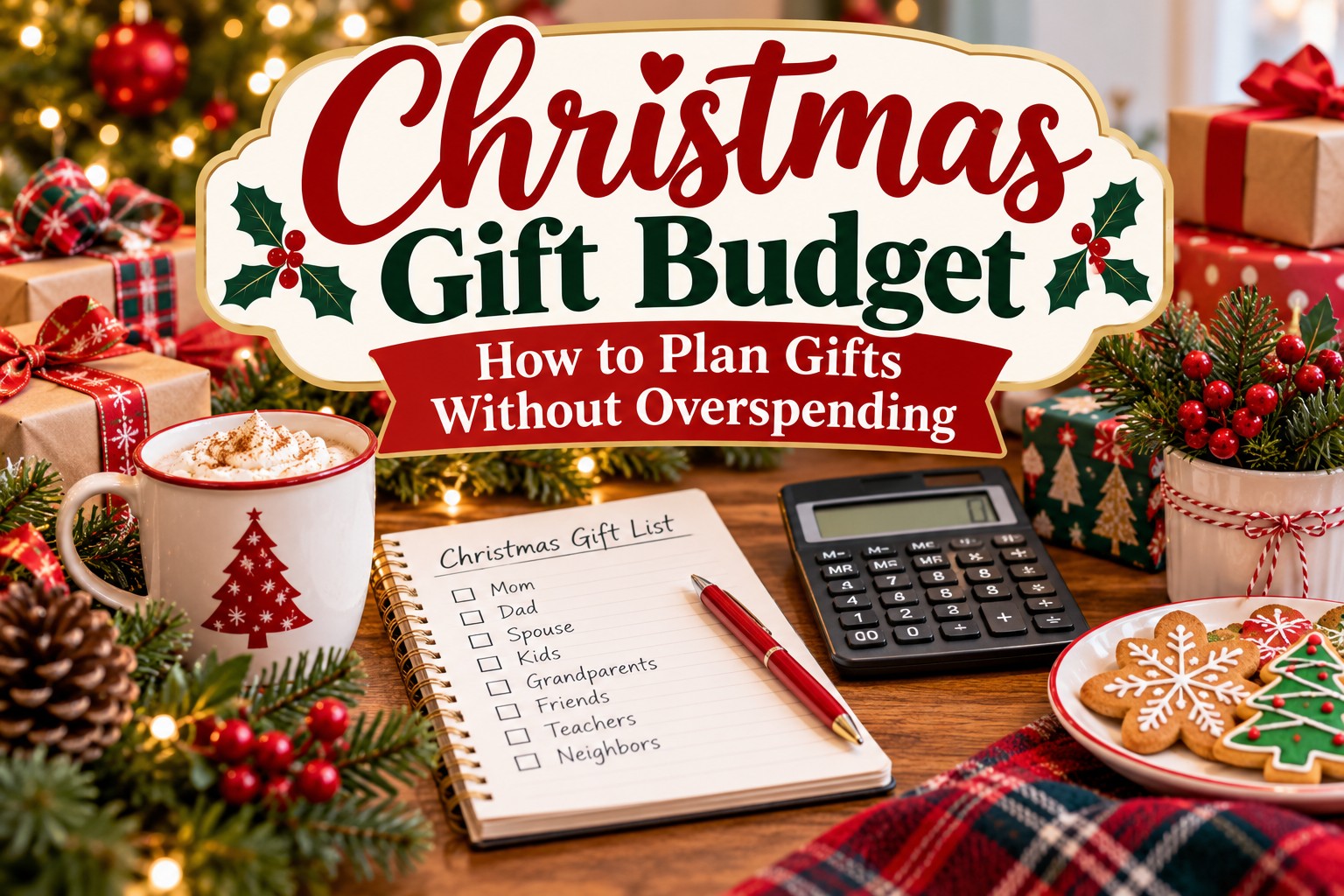
What Is a Christmas Gift Budget?
A Christmas gift budget is the total amount you choose to spend on presents, divided into smaller limits for each person or category. It includes more than the price on a gift tag. Sales tax, shipping, wrapping supplies, gift bags, and stocking stuffers can all affect the total.
Making the budget before shopping helps you avoid the common trap of deciding each gift is “only another $15” without noticing what those purchases add up to.
How to Create a Christmas Gift Budget in 6 Steps
Start With the Money You Actually Have
Look at your checking balance, planned income before Christmas, upcoming bills, groceries, debt payments, and any existing holiday savings. Set aside the money needed for essentials first. The amount left that you can safely use for gifts is your starting point.
Choose One Total Gift-Spending Limit
Pick a firm maximum, such as $200, $350, or $500, based on your situation. This is a ceiling, not a spending challenge. If the number feels uncomfortable, lower it before making your list.
List Everyone You Plan to Buy For
Write down each recipient, including people who are easy to forget: coworkers, teachers, neighbors, gift exchanges, and stocking stuffers. Decide whether a card, homemade treat, or shared experience would be more appropriate for some people.
Assign a Maximum Amount to Each Person
Prioritize your most meaningful gifts first, then divide what remains among other recipients. You do not have to spend the same amount on everyone. Make sure the individual limits add up to no more than your total budget.
Reserve Money for Hidden Costs
Set aside a portion of your budget for sales tax, shipping, gift wrap, and last-minute needs. You can reduce these costs by using store pickup, reusable gift bags, or wrapping supplies you already own.
Track Every Purchase and Adjust
Record the actual amount spent, including tax and shipping. Subtract it from your remaining budget. If one gift costs more than planned, lower another category before making the next purchase.
Example: A $300 Christmas Gift Budget
Here’s an illustrative way to divide $300 among gifts and extra costs. Your household may have different recipients, priorities, and prices.
| Recipient or Category | Budget |
|---|---|
| Partner or spouse | $60 |
| Child or close family member #1 | $55 |
| Child or close family member #2 | $55 |
| Parents or relatives | $50 |
| Friends, teachers, or exchanges | $35 |
| Stocking stuffers | $20 |
| Tax, shipping, and wrapping reserve | $25 |
| Total Christmas gift budget | $300 |
These are example allocations, not recommended spending amounts. Change the categories and amounts to suit your own circumstances.
Use This Simple Christmas Gift Budget Formula
Money safely available for gifts − planned gift spending − gift-related extras = remaining gift budget.
Example: $300 available − $215 in purchased gifts − $18 in tax and wrapping = $67 remaining.
Update the number after every shopping trip or online order. For items you’ve ordered but haven’t received, count the purchase immediately rather than waiting for delivery.
Christmas Gift Budget Tracker
You can recreate this simple table in a notebook, spreadsheet, or printable planner.
| Recipient | Gift Idea | Limit | Actual Cost |
|---|---|---|---|
| Example: Mom | Photo book | $25 | $21 |
| Example: Friend | Cookie tin | $15 | Not purchased |
| __________ | __________ | __________ | __________ |
| __________ | __________ | __________ | __________ |
Tip: Add a column for “Purchased?” and another for “Wrapped?” if those details help you stay organized.
How to Save Money on Christmas Gifts Without Making Them Feel Cheap
Set a Family Gift Agreement
Suggest a spending cap, Secret Santa exchange, gifts for children only, or one shared family experience. Agreeing on expectations early can save everyone money and stress.
Shop With a Specific List
Decide on a gift idea and maximum price before browsing. A sale isn’t a bargain if you buy something that wasn’t on your list.
Consider Meaningful Low-Cost Gifts
Framed photos, homemade baked goods, a favorite recipe collection, a handwritten letter, or a small practical gift can be thoughtful without being expensive.
Use Price Comparisons, Not Just Sale Signs
Check the final price after shipping and tax, and compare with other stores. Watch for “buy more to save” offers that push you past your original budget.
Give Experiences That Fit Your Means
A movie night at home, a homemade dinner, a park outing, or a planned afternoon together may be more memorable than an extra item.
Keep a Small Buffer
A modest reserve helps cover a forgotten recipient or price change without pulling money away from bills. If you don’t use it, keep the savings.
What If You Have Almost No Money for Christmas Gifts?
You are allowed to have a very small gift budget, or no gift budget at all. Being clear about what you can afford is more useful than trying to match someone else’s holiday spending.
Consider a handwritten note, homemade treats using ingredients already in your pantry, a family game night, or a no-gifts agreement. If you’re paying down debt or working to stabilize your finances, protecting that progress matters.
For help prioritizing bills and expenses, read Which Bills to Pay First? and How to Budget Your Paycheck.
Christmas Gift Budget Checklist
- Review bills and essential expenses before choosing a gift budget
- Set one total gift-spending limit
- Write down every person or gift exchange
- Choose a spending cap for each recipient
- Include taxes, shipping, wrapping, and stocking stuffers
- Make a specific shopping list
- Track actual costs immediately
- Check your remaining budget before each new purchase
- Stop shopping when your budget is used up
🎁 Ready to Plan Your Christmas Gifts?
Download the free five-page Christmas Gift Budget Planner and keep your gift list, spending limits, and purchases in one place.
Get the Free Christmas Planner →Frequently Asked Questions
How much should I budget for Christmas gifts?
There is no universal amount. Start with what remains after essentials, planned bills, and priority financial commitments. Choose a number that won’t create new debt or disrupt necessary spending.
Should I include stocking stuffers in my Christmas gift budget?
Yes. Stocking stuffers, gift exchanges, wrapping, shipping, and sales tax all count toward the total cost of giving.
What if I spend more than planned on one gift?
Update your tracker and reduce another gift category or use money from your planned buffer. Avoid increasing the overall spending limit automatically.
Is it okay to give fewer Christmas gifts?
Absolutely. Fewer thoughtful gifts, shared experiences, or agreed-upon spending limits can make Christmas more manageable.
When should I start saving for Christmas gifts?
As early as your budget allows. If you set a target and know how many paychecks remain, divide the amount by that number to estimate what you would need to save per paycheck, without sacrificing essentials.
More Christmas Planning Guides
- Christmas That Works: Affordable Holiday Ideas
- Christmas Grocery List on a Budget
- Christmas Dinner on a Budget: Feed 8
- Christmas Dinner for 2–4 on a Budget
- Christmas Potluck Ideas on a Budget
Final Thoughts
A Christmas gift budget isn’t about taking the joy out of giving. It’s about making room for what matters without letting holiday spending take over your finances. Choose a realistic total, assign limits, track your purchases, and give yourself permission to stop when the budget is spent.
The best gift plan is one that still feels good when January arrives.